Armed response vs static guarding: pay, training, risk and which career pays better
One puts you in a vehicle answering alarms. The other puts you on a post. How they compare, and how officers move from one to the other.
TenEight Team · 18 September 2026
Armed response vs static guarding is the first real career choice a security officer makes after Grade C. One puts you in a vehicle, armed, answering alarms across a suburb. The other puts you on a post (a gate, a desk, a perimeter) for twelve hours at a time. They pay differently, they train differently, and they suit different people.

What static guarding actually is
Static guarding is the backbone of the industry and where nearly every officer starts. You are assigned to a site (a residential estate, an office park, a shopping centre, a warehouse, a school) and you control access, patrol, observe and report. The post is fixed, the routine is set, and the risk on most sites is low most of the time.
Typical shifts are 12 hours, on a 4-on 4-off or 6-on 3-off pattern, rotating between days and nights. Grade E and D officers fill most static posts. Grade C officers take the higher-risk sites and supervise.
Pay: the Sectoral Determination 6 minimum for the grade and area. From 1 March 2026 that is R7 003 a month for Grades C, D and E in the metros, with night allowance and overtime on top. Experienced officers on good sites earn above that, but the range is narrow.
What it needs: PSIRA registration at the grade the post requires. No firearm, no driver's licence for most posts.
What armed response actually is
Armed response officers work for a company that monitors alarms across an area. When an alarm triggers, a control room dispatches the nearest vehicle, and the officer drives to the property, assesses it, deals with what they find, and reports back. Between calls they patrol the area. The work is mobile, unpredictable and occasionally dangerous, house break-ins in progress, armed robberies, hijackings.
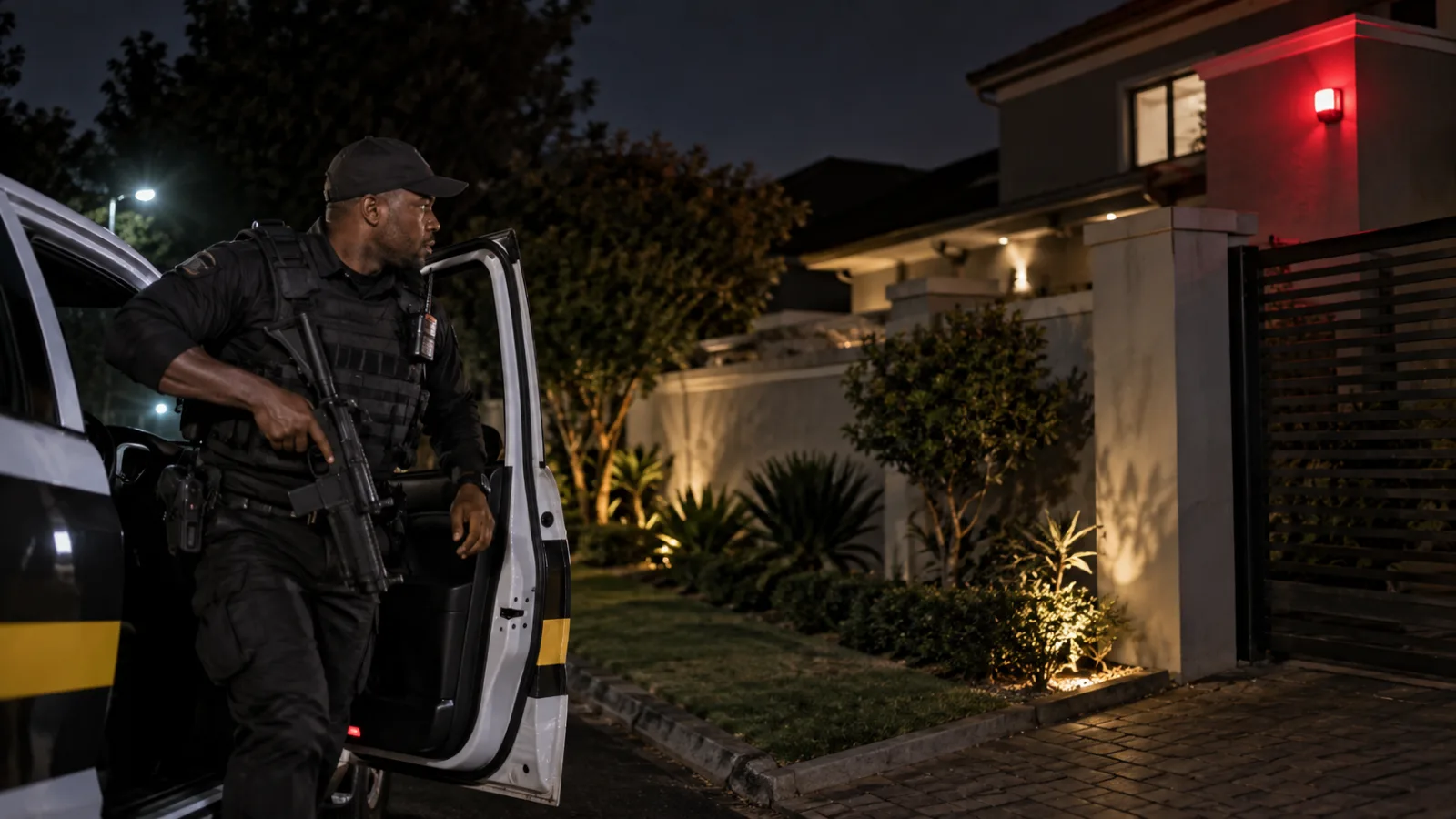
Shifts are also 12 hours, but the night shift is busier than the day, and the pace depends entirely on the area. A quiet suburb might mean four calls a night. A high-crime area can mean twenty.
Pay: armed response is priced above static guarding because of the firearm, the driving and the risk. Market rates in the metros commonly run from around R8 500 to R12 000 a month for experienced officers, with the top end at companies that pay for performance and long service. That is a market observation, not a legal minimum. The legal floor is still the Sectoral Determination rate for your grade.
What it needs:
PSIRA registration, usually Grade C as the practical minimum most companies insist on
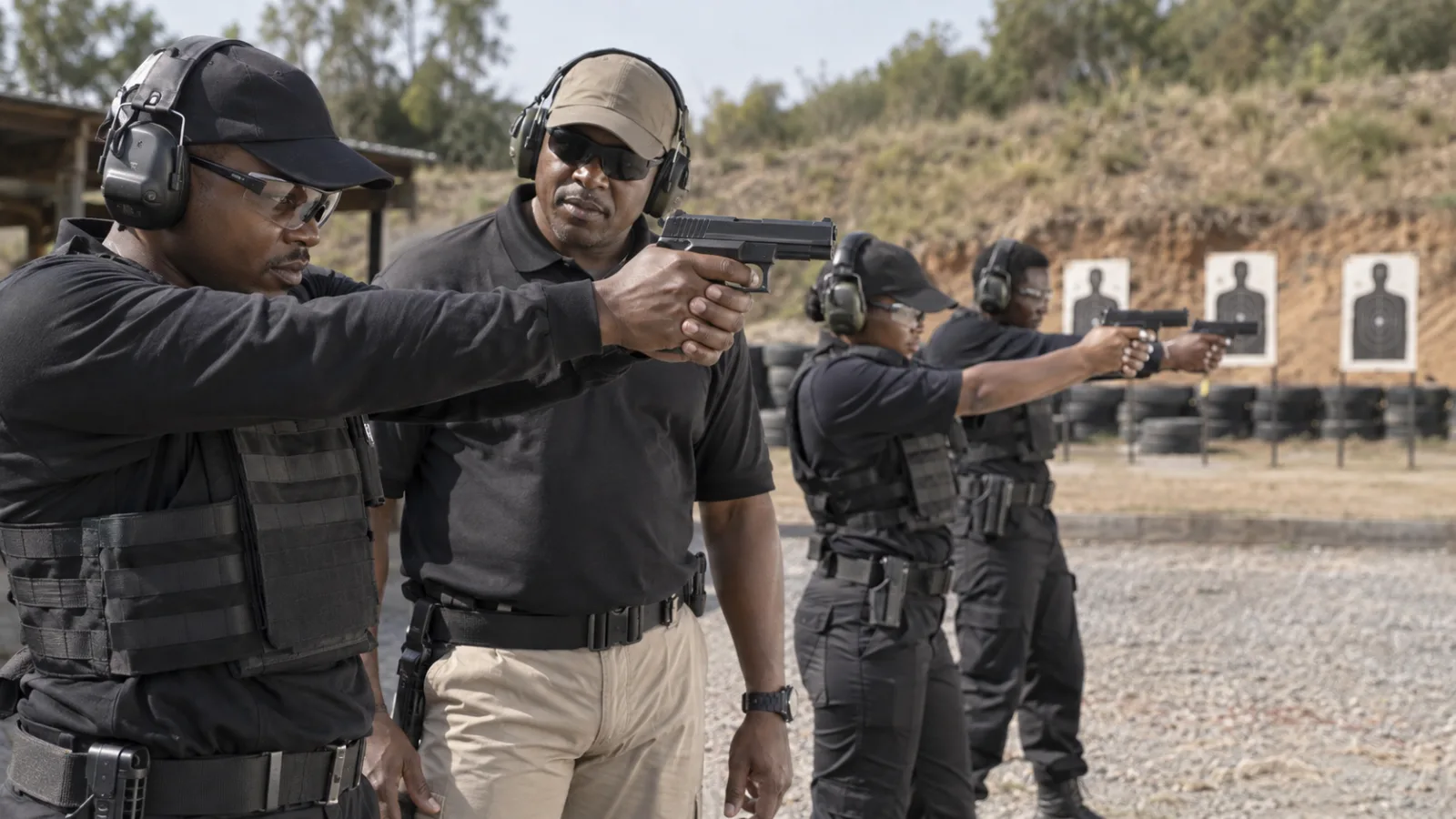
A firearm competency certificate for the relevant firearm type, issued under the Firearms Control Act, plus PSIRA's own armed-response training
A valid driver's licence, usually Code B, and a clean driving record
Good physical fitness and the temperament to stay calm under pressure
Some companies add advanced driving and tactical courses
Armed response vs static guarding: the comparison
Pay. Armed response wins, by roughly R1 500 to R5 000 a month for the same grade. Over a year that is a large difference.
Training cost and time. Static guarding needs your grade and nothing else. Armed response needs firearm competency (several days of training plus the certificate application), a driver's licence and armed-response training, which can take months and cost several thousand rand if you pay for it yourself. Some companies sponsor it for officers they want to keep.
Risk. Static guarding on most sites is low-risk. Armed response is where officers face armed criminals. The industry's fatalities are heavily concentrated in armed response and cash-in-transit.
Routine. Static posts are predictable. Some officers find that reassuring and others find it deadening. Armed response is never the same night twice.
Physical demands. Standing a 12-hour post is tiring in its own way, but armed response demands fitness, fast reactions and long hours in a vehicle.
Career path. Static guarding leads through Grade B and A into site supervision and management. Armed response leads into tactical units, cash-in-transit, close protection and armed-response management: the higher-paid end of operations.
Which one should you choose?
Choose static guarding if you want a predictable roster, a post near home, a low-risk environment, and a path into supervision. It is also the right place to be while you get to Grade C and save for the next step.
Choose armed response if you want higher pay sooner, are comfortable with a firearm and with risk, hold or can get a driver's licence, and prefer a job that moves. Be honest with yourself about the risk. It is real and the pay reflects it.
Many officers do both in sequence: static guarding to Grade C, firearm competency and a driver's licence while working, then a move into armed response. That path costs less and gets you into the better-paid role with a record an employer can trust.
How to make the move
Get to Grade C. See our PSIRA grades guide.
Get your driver's licence if you do not have it.
Complete firearm competency with an accredited provider and apply for the certificate.
Do PSIRA armed-response training.
Record the certificates on your profile. Employers on TenEight advertise armed-response posts with the requirements listed, so you can browse security jobs that match what you hold and apply through a free profile that shows your firearm competency and licence.
Quick answers
Does armed response pay more than security guarding?
Yes. Armed response officers in the metros typically earn R8 500 to R12 000 a month, against the R7 003 minimum for static Grade C posts, because of the firearm competency, driving and risk.
What do you need to be an armed response officer?
PSIRA registration (usually Grade C), a firearm competency certificate, armed-response training and a driver's licence.
Is armed response dangerous?
More than static guarding. Armed response officers attend crimes in progress, and the industry's serious injuries are concentrated in armed response and cash-in-transit.