Security guard interview questions in South Africa: what employers ask and how to answer
Every question on the list is testing one of three things: trust, reliability, or what you do when something goes wrong. How to show all three.
TenEight Team · 16 September 2026
Most security guard interview questions are not designed to catch you out. The interviewer wants to know three things: can you be trusted on a post alone, will you turn up on time for every shift, and do you know what to do when something goes wrong. If you can show all three with real examples, you are ahead of most of the people in the waiting room.
Before the interview: what to bring
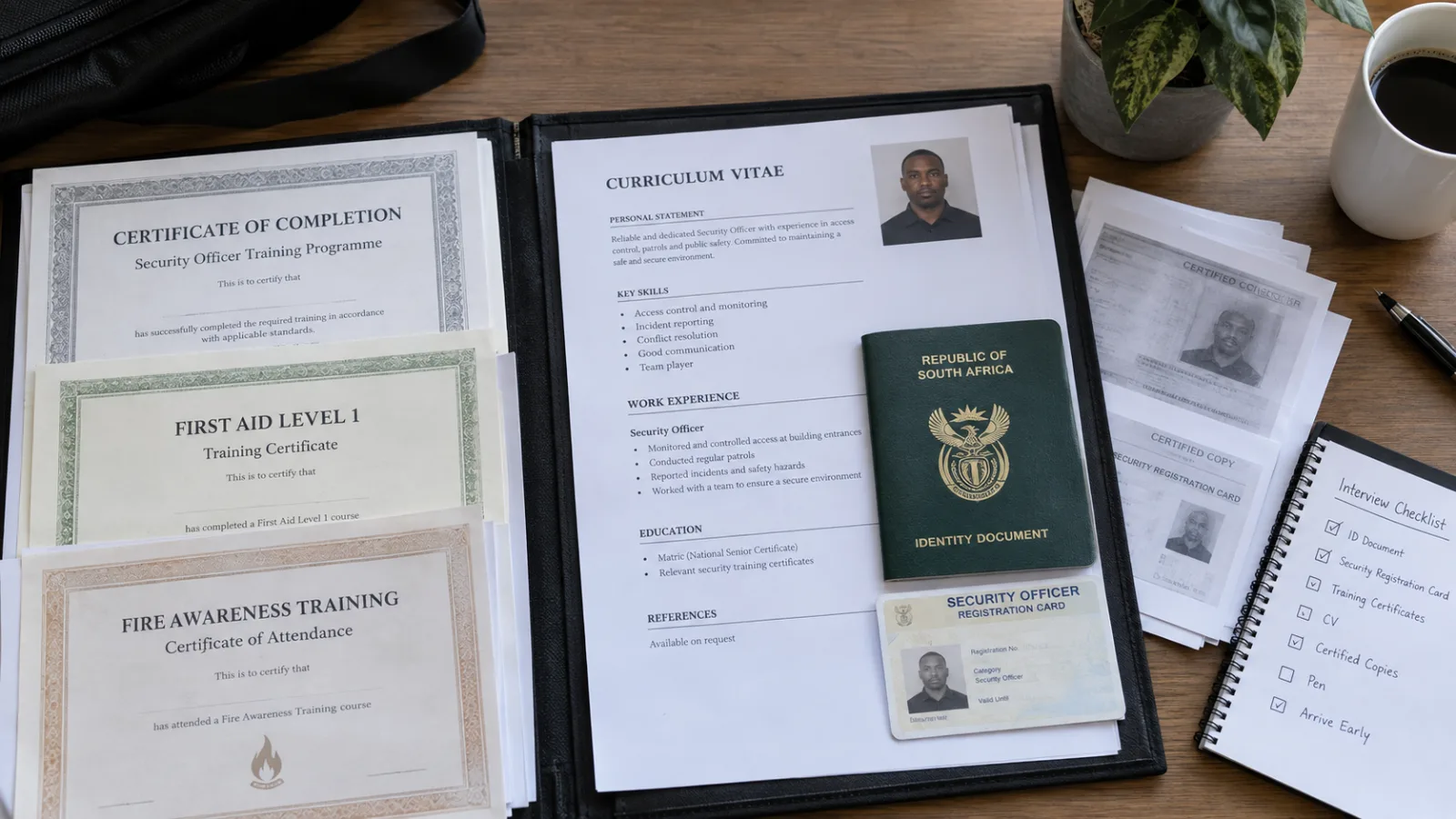
Security interviews are as much a document check as a conversation. Arrive with:
Your PSIRA certificate and registration card, current and not expired.
Your ID and, if you have them, your matric certificate and training certificates for each grade.
Any specialist certificates: firearm competency, first aid, CCTV or control-room training.
A short, clean CV with your grade, your employers and the sites you worked, in date order.
A reference or two from previous supervisors, with phone numbers that work.
An employer who cannot see your registration will usually not proceed. If yours has lapsed, renew it first and go to interviews once it is back in order.
The security guard interview questions you will be asked
"Tell me about yourself."
They want a two-minute summary of your grade, your experience and what kind of post you are looking for. Not your life story. Say your grade first, then your most relevant site experience, then why you applied for this post.
"I am a Grade C officer with four years' experience, mostly access control at residential estates and one year on a retail site in Sandton. I am looking for a permanent post with a company that gives its officers a clear roster."
"Why do you want to work in security?" or "Why this company?"
Avoid "I need a job". Talk about responsibility, working with people, and something specific about the employer: the kind of sites they guard, or a reputation for paying on time. A company on the TenEight directory usually lists its services. Read the page before you go.
"What is your PSIRA grade and is it current?"
A factual question with a factual answer. Give the grade, the expiry date, and any specialist training. If your certificate expires soon, say so and say when you are renewing.
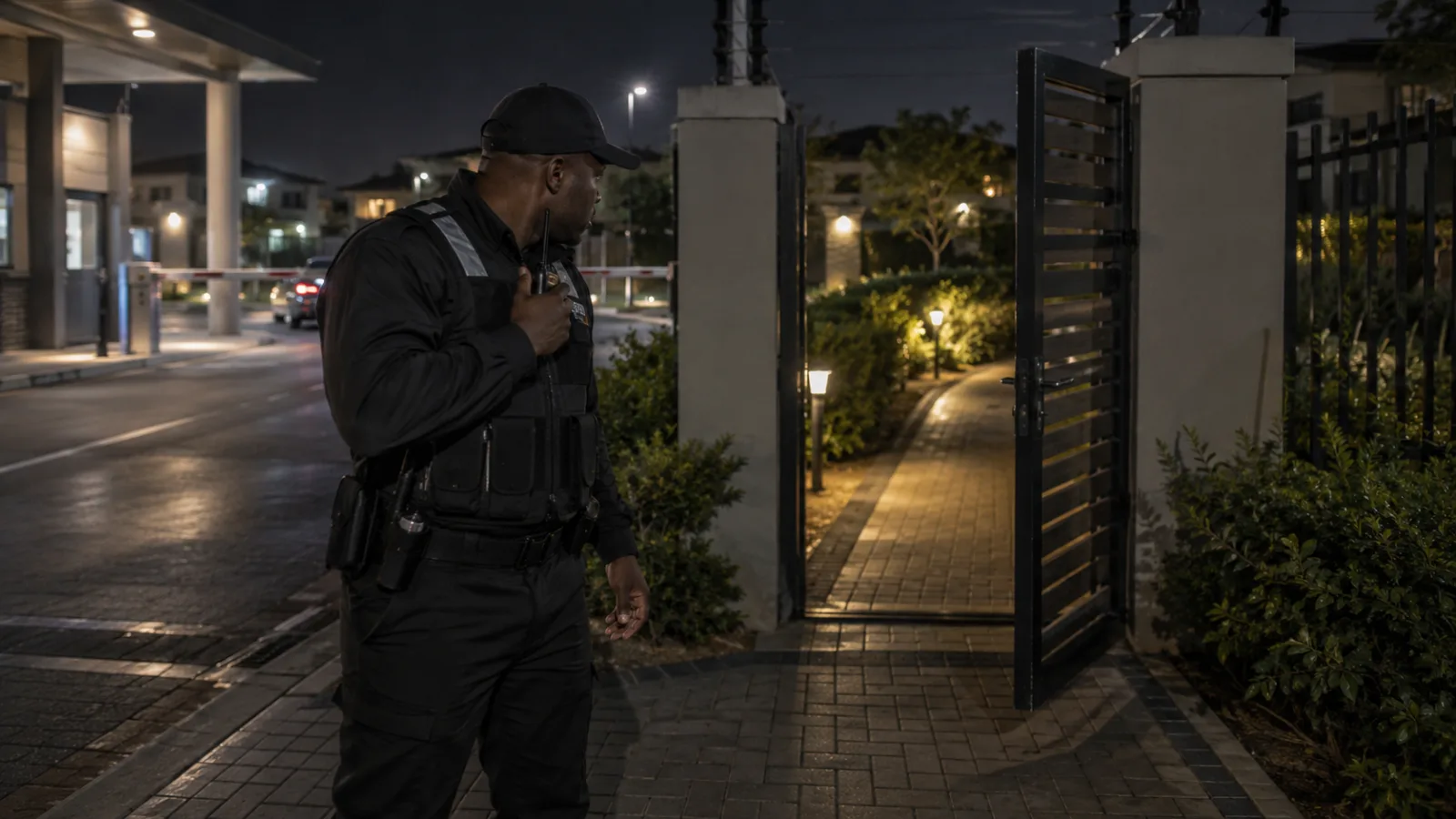
"What would you do if you found a gate open on patrol?"
This is a procedure question. The answer they want is observe, report, secure, record: check for signs of tampering, radio the control room or supervisor, secure the gate if it is safe to do so, and write it in the occurrence book with the time. Never say you would "investigate" alone.
"What would you do if a visitor refused to sign in or be searched?"
Stay calm, explain the site rule, and refuse entry politely if they will not comply. Escalate to your supervisor or the client's representative rather than arguing. Employers are listening for whether you lose your temper.
"Have you ever dealt with an emergency on a post? What happened?"
Use a real example if you have one: a fire, a medical case, a break-in, a fight. Describe what you saw, what you did in what order, who you called, and what you wrote down afterwards. If you have never faced one, say so honestly and describe what your training tells you to do.
"How do you handle long, quiet shifts?"
They are asking whether you stay alert on a boring post. Talk about patrol routines, keeping the occurrence book current, checking equipment, and staying off your phone.
"Can you work nights, weekends and public holidays?"
Answer truthfully. If you can, say so plainly. If you have a genuine limit (a court order, a study commitment), say what it is. An officer who says yes to everything and then cannot do the roster costs the employer more than one who is honest at the interview.
"Why did you leave your last employer?"
Keep it short and never insult the previous company, even if they deserved it. "The contract ended", "the site closed", "I wanted a post closer to home" or "I wanted a company with a clearer path to Grade B" are all fine.

"Do you have a criminal record?"
Say the truth. PSIRA registration already requires a clean record for the relevant offences, and employers run their own checks, so anything you hide will surface. If there is an old matter that did not stop your registration, explain it in one sentence.
"What do you know about the Private Security Industry Regulation Act?"
You do not need to quote sections. Say that it governs PSIRA registration, sets the code of conduct for officers, and makes it an offence to work unregistered or for an unregistered company. If you can add that your grade and your certificate come from it, that is enough.
Questions you should ask them
An interview is also your chance to avoid a bad employer. Ask:
What is the roster: shifts, days on and off?
What is the pay, and is it at or above the Sectoral Determination minimum for my grade?
Are uniforms supplied, and is there a provident fund?
Which site would I start on, and is transport provided for night shifts?
Does the company pay for grade training?
A good employer answers all five without hesitation. Vague answers about pay are a warning sign.
Practical tips on the day
Arrive early and in clean, neat clothes. Many companies interview in uniform shirts. If you have one from a previous employer, do not wear their branding.
Bring copies of every document so the interviewer can keep a set.
Switch your phone off, not to silent.
Follow up within two days with a short message thanking them and confirming your interest.
Then keep applying. Employers on TenEight advertise the grade, site type and location up front, so you can browse security jobs that match your grade and apply with a profile that already carries your certificates. If you do not have one yet, create a free profile before your next interview.
Quick answers
What are the most common security guard interview questions?
Tell me about yourself; why security; your PSIRA grade; what you would do if a gate was open or a visitor refused a search. how you handle emergencies; whether you can work nights and weekends; why you left your last job.
What should I wear to a security guard interview?
Neat, clean and plain: a collared shirt, dark trousers and clean shoes. Not a previous employer's uniform.