Security guard onboarding checklist: from signed offer to the end of the first month
The compliance file, the company induction, the site induction and the first-month checks, in the order they need to happen.
TenEight Team · 17 September 2026
A security guard onboarding checklist is the difference between an officer who is competent on the post by the end of week one and one who is still asking where the occurrence book is in week three. In this industry the first shift is also a legal event: the moment an officer stands a post under your name, you are responsible for their registration, their pay, their equipment and their conduct. This checklist covers everything from the day the offer is accepted to the end of the first month, in the order it needs to happen, so that nothing is discovered after an incident.

Before the first shift: the compliance file
Nothing else matters until this is done. Build a file for the officer containing:
PSIRA registration: a copy of the certificate and card, with the number, grade and expiry date recorded in your system and confirmed with PSIRA directly rather than taken from the copy.
ID document or passport and work permit, with the permit's expiry recorded.
Grade certificates for the grade the post requires.
Specialist certificates the post needs: firearm competency (with expiry), first aid, CCTV, control-room, driver's licence if they will drive.
Criminal record check result from a registered screening agency.
Reference checks: at least one previous supervisor, with the date and the notes.
Signed employment contract stating the grade, site, roster, wage, allowances and probation period.
Bank details, tax number, UIF and provident fund registration forms.
Emergency contact and next of kin.
Set a diary reminder for every expiry date in the file. A PSIRA certificate that lapses mid-contract takes the officer off the roster and exposes you.
Day one: induction
The first day is not for the post. It is for the company.
Company induction: who is who, the chain of command, how to reach the control room and the supervisor, disciplinary and grievance procedures, the code of conduct.
Uniform and equipment issue, signed for: uniform set, name badge, radio, torch, any keys, PPE. Record serial numbers.
Policies signed: firearms (if applicable), use of force, use of phones on post, social media, confidentiality, alcohol and drugs.
Payroll walk-through: pay date, how overtime and night allowance are calculated, what the deductions will be. Officers who understand their first payslip do not resign over it.
Roster handed over in writing, with shift times and the leave request process.

Days two to five: site induction
Now the post. The officer should be walked through the site by the site supervisor or a senior officer, not sent alone on the first shift:
Site orders: the written instructions for that post, read and signed.
Physical walk-through: every access point, alarm panel, fire equipment, assembly points, CCTV coverage, blind spots, keys and their locations.
Client contacts: who at the client the officer may speak to, and about what.
The occurrence book and incident forms: where they are, how entries are made, what must always be recorded. A short exercise writing a sample entry is worth an hour of explanation.
Radio procedure and the control room's call signs.
Emergency procedures: fire, medical, armed robbery, bomb threat, power failure. What to do first, who to call, what not to do.
A buddy shift: the first full shift alongside an experienced officer, then a first solo shift with a supervisor visit.
Week two to four: checks and feedback
Supervisor visit on at least two shifts, including one night shift, with a short written note on each.
Occurrence book review: are entries complete, timed and legible?
Client feedback: a call to the client contact in week two catches problems while they are small.
First payslip check with the officer, line by line, before they take it home.
Probation conversation at the end of the month: what is going well, what needs to change, what happens next.
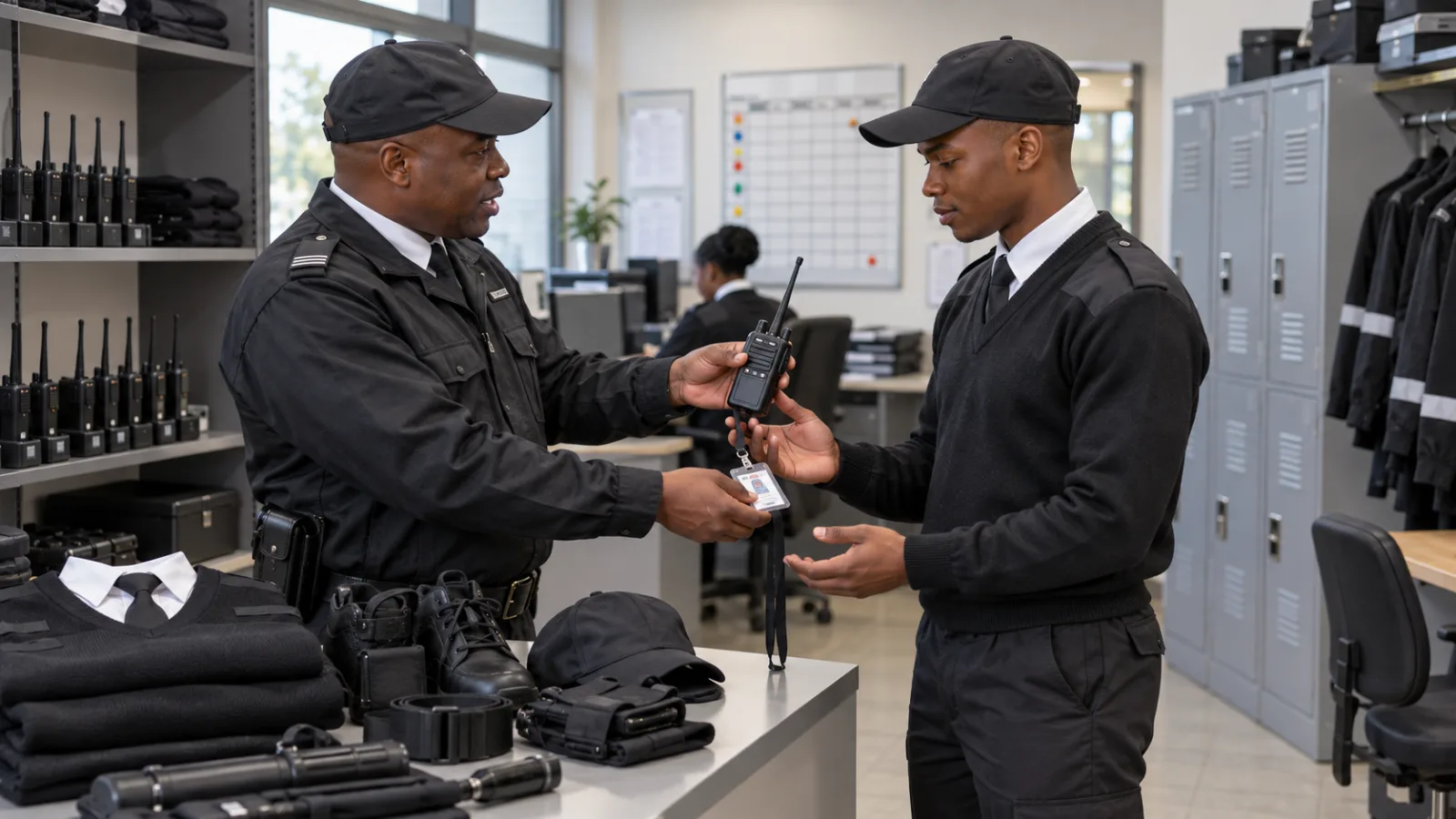
The security guard onboarding checklist in one page
Before day one: registration confirmed with PSIRA · ID and permits · grade and specialist certificates · criminal record check · references · signed contract · payroll forms · expiry reminders set.
Day one: company induction · uniform and equipment signed for · policies signed · payroll explained · roster in writing.
Days two to five: site orders read and signed · site walk-through · client contacts · occurrence book practice · radio procedure · emergency procedures · buddy shift · first solo shift with supervisor visit.
Weeks two to four: two supervisor visits · occurrence book review · client feedback call · first payslip check · probation conversation.
Why it pays to do all of it
Turnover in guarding is high, and most of it happens in the first ninety days. The officers who stay are the ones who were treated as professionals from the first day: their documents handled properly, their pay explained, their post shown to them rather than dumped on them. A structured onboarding also protects you: after an incident, the first questions from the client, the insurer and PSIRA are whether the officer was registered, trained on the site orders and told the emergency procedure, and a signed file answers all three.
If the file starts before the hire, it is easier. Employers who post a job on TenEight receive applications with the officer's recorded grade, registration details and certificate expiry dates already attached, which gives the compliance file a head start, confirm them with PSIRA, then build the rest of the file from there.
Quick answers
What documents do I need to onboard a security guard?
PSIRA registration confirmed with PSIRA, ID or permit, grade and specialist certificates, a criminal record check, references, a signed contract, and payroll, UIF and provident fund forms.
How long should security guard onboarding take?
One day of company induction, up to a week of site induction including a buddy shift, and supervisor checks through the first month.
Can a new security guard start on a post immediately?
Only once their registration is confirmed and they have been trained on the site orders. Sending an unbriefed officer to a post alone is where most early incidents come from.